

Controlling labor costs keeps more business owners up at night than almost any other line item. Payroll eats 20% to 70% of revenue depending on your industry, and one bad hiring decision or scheduling mistake can wipe out a quarter’s profit. This guide skips the vague advice. You get real formulas, industry benchmarks, and the legal guardrails most articles never mention.
What Controlling Labor Costs Actually Means
Cutting costs and controlling costs are not the same thing. Cutting means slashing headcount or wages fast. Controlling means building a system that keeps labor spend proportional to revenue, quarter after quarter.
Most companies fail here because they only look at wages. Real labor cost includes far more.
Direct vs. Indirect Labor Costs
Direct labor cost pays the person making your product or delivering your service. A barista, a machine operator, a customer service rep.
Indirect labor cost pays everyone who supports that work without touching the product directly. HR staff, maintenance, supervisors. Both categories drain your budget, but businesses usually track only the first one.
The Labor Burden Rate Nobody Talks About
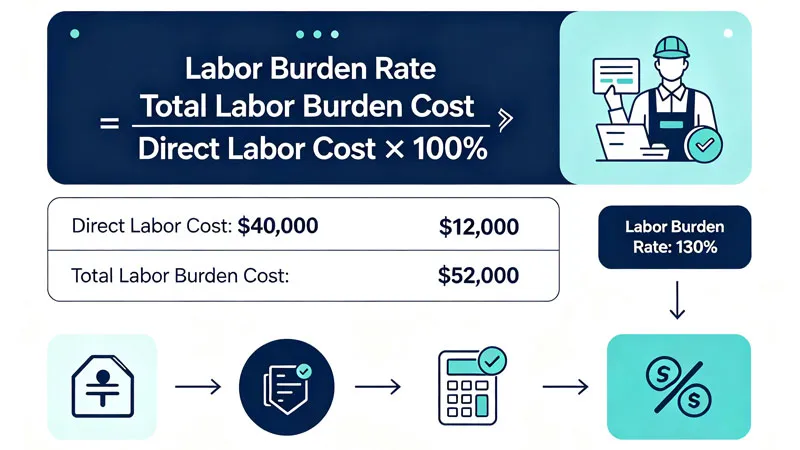
Your labor burden rate is the true hourly cost of an employee once you stack on payroll taxes, insurance, benefits, and paid time off.
A $20/hour employee often costs $27 to $30/hour once you add everything up. Here’s the formula:
Labor Burden Rate = (Annual Wages + Payroll Taxes + Benefits + Insurance) ÷ Total Annual Hours Worked
Run this number for every role before you make a staffing decision. Skipping it is how businesses underestimate true costs by 30% or more.
How to Calculate Your Labor Cost Percentage
This single number tells you more than any spreadsheet. It’s the ratio of labor spend to total revenue.
Labor Cost Percentage = (Total Labor Cost ÷ Total Revenue) x 100
Run it monthly. A rising trend means something changed — pricing, staffing, or efficiency — and you want to catch it early, not at year-end.
Healthy Labor Cost Benchmarks by Industry
Your target ratio depends entirely on your industry. A restaurant chasing a retail benchmark will make bad decisions.
| Industry | Healthy Labor Cost % of Revenue |
|---|---|
| Restaurants | 28% – 35% |
| Retail | 10% – 20% |
| Manufacturing | 15% – 25% |
| Professional Services | 40% – 55% |
| Healthcare | 45% – 60% |
Bureau of Labor Statistics compensation data
If your ratio sits well above your industry range, that’s your signal to dig deeper — not to panic and start cutting.
The Legal Guardrails Most Guides Skip
This is where a lot of well-meaning cost-cutting turns into a lawsuit. Labor law sets hard limits on what you can and can’t do.
Overtime Rules Under the FLSA
The Fair Labor Standards Act requires overtime pay at 1.5x the regular rate past 40 hours a week for non-exempt employees. Misclassifying someone as exempt to dodge this is one of the most common — and most expensive — mistakes employers make.
Why Cutting Hours to Avoid ACA Benefits Can Backfire
Under the Affordable Care Act, employees averaging 30+ hours a week generally qualify for health coverage if you have 50+ full-time equivalent employees. Businesses that trim hours specifically to duck this threshold often trigger higher turnover, and turnover costs more than the coverage would have.
State and Local Scheduling Laws
Several states now require advance notice for schedule changes, with penalty pay for last-minute shifts. Check your state’s rules before you build a “flexible” schedule that isn’t actually legal.
Disclaimer note within section: This section explains general concepts and isn’t legal advice. Talk to an employment attorney before changing pay practices.
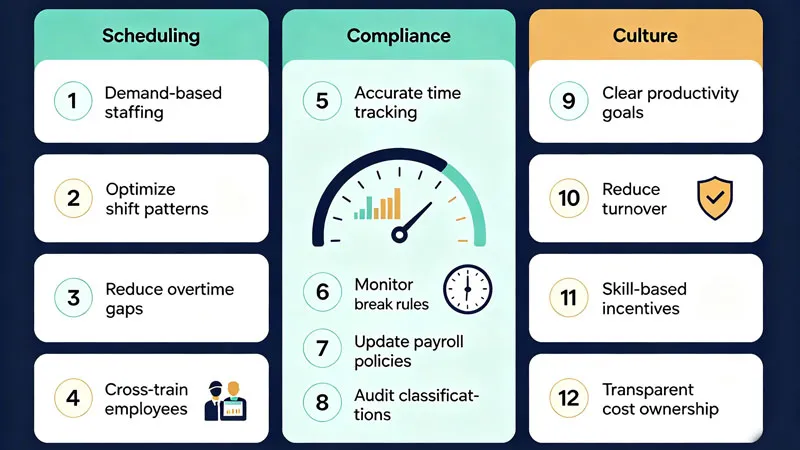
12 Ways to Control Labor Costs Without Hurting Output
1. Forecast Demand Before You Schedule
Match staffing to actual traffic patterns, not gut feeling. Historical data beats guesswork every time.
2. Automate Payroll and Time Tracking
Manual calculations create errors. Automated systems catch overtime, holiday pay, and shift differentials correctly the first time.
3. Combine PTO Into One Flexible Bucket
Merging vacation and sick leave into a single pool reduces unplanned absences and simplifies tracking.
4. Cross-Train Your Team
Employees who can cover multiple roles reduce your dependence on overtime when someone calls in sick.
5. Fix Your Turnover Problem at the Management Level
Bad managers drive people out the door. Gallup’s research on manager quality found it’s the single biggest factor in employee engagement and retention.
Employee retention strategies guide
6. Audit Your Benefits Package
Ask your team which perks they actually use. Free lunches sound nice; flexible hours often matter more and cost less.
7. Use Part-Time and Freelance Labor Carefully
This works, but classify workers correctly. Misclassifying employees as contractors is a fast track to IRS penalties.
8. Eliminate Buddy Punching With Biometric Time Clocks
This one practice alone can inflate payroll by over 2%. A fingerprint scanner pays for itself fast.
9. Apply Lean Process Improvement
Map your workflows and cut the steps that don’t add value. Waste hides in duplicate work more often than people realize.
10. Break Down Silos Between Departments
Duplicate tasks between teams burn labor hours nobody notices until you look closely.
11. Invest in Scheduling Software
Platforms that forecast demand and auto-build schedules cut both overtime and understaffing simultaneously.
Workforce scheduling software comparison
12. Build a Retention-First Culture
Recognition, growth paths, and fair pay keep your best people from shopping around.
The Real Cost of Cutting Too Fast
Aggressive cuts often cost more than they save. Replacing an employee typically runs 50% to 200% of their annual salary once you count recruiting, onboarding, and lost productivity.
Run the math before you cut a role to save $15/hour. If that person leaves and you spend three months backfilling, the “savings” disappear fast.
Labor Cost Control by Business Size
Small businesses should start with the labor cost percentage formula and fix scheduling first — it’s the fastest win.
Mid-size companies get the most value from automation and cross-training, since manual processes scale badly.
Multi-location operations need centralized benchmarking so one location’s overtime problem doesn’t hide in the average.
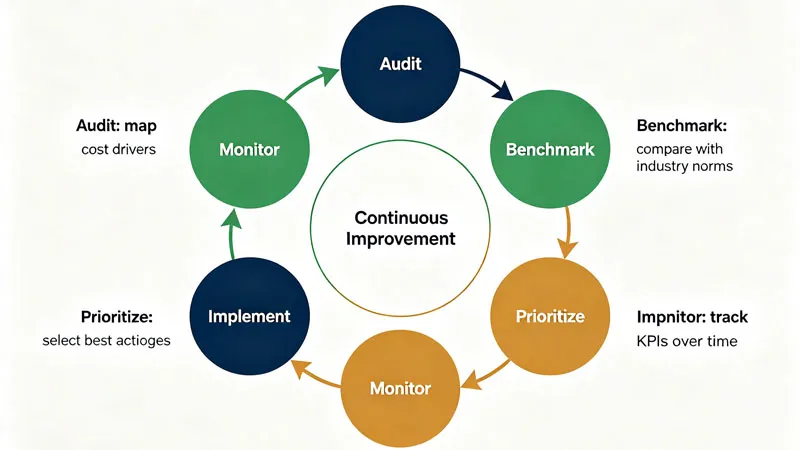
A Simple Framework You Can Apply This Quarter
Audit your current labor cost percentage. Benchmark it against your industry. Prioritize the one or two strategies above with the biggest gap. Implement for 90 days. Monitor monthly and adjust.
Frequently Asked Questions
What is a good labor cost percentage for a small business?
It depends on your industry. Restaurants typically target 28-35%, while retail businesses run closer to 10-20%. Compare against your specific sector, not a generic number.
How do you reduce labor costs without layoffs?
Focus on scheduling efficiency, cross-training, and cutting overtime waste first. These changes often save 10-15% without cutting a single position.
Is cutting employee hours to avoid ACA benefits legal?
It can be legal, but it’s risky. It often triggers higher turnover and morale problems that cost more than the coverage would have.
What’s the difference between labor cost and labor burden rate?
Labor cost is what you pay in wages. Labor burden rate includes wages plus taxes, benefits, and insurance — the true hourly cost of an employee.
How much does employee turnover really cost?
Most estimates put it between 50% and 200% of the departing employee’s annual salary, depending on role complexity and training time.
Disclaimer: This article is for informational purposes only and does not constitute financial, legal, or tax advice. Labor laws vary by state and change frequently. Consult a licensed employment attorney or certified compensation professional before implementing any staffing or pay policy changes.