

A credit card reversal and a refund look the same on your statement — money coming back. They aren’t the same process, though, and mixing them up is why so many disputes drag on for weeks. This guide breaks down exactly what separates the two, how long each one takes, and what to do when a merchant won’t cooperate.
Reversal vs. Refund at a Glance
Before the details, here’s the short version.
| Factor | Reversal | Refund |
|---|---|---|
| Transaction status | Not yet settled | Already settled |
| Did funds leave your account? | No | Yes, they come back |
| Typical turnaround | 1–3 business days | 5–14 business days |
| Who initiates it | Merchant, bank, or processor | Merchant |
| Fees involved | Usually none | Interchange fee, paid by merchant |
| Shows on credit report | No | No |
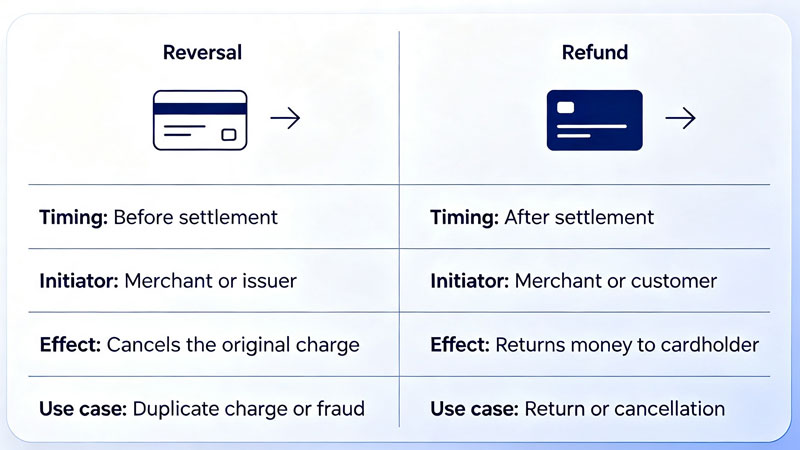
The core difference comes down to timing. If your bank can catch the charge before it settles, you get a reversal. If the money already moved, you get a refund instead.
What Is a Credit Card Refund?
A refund happens after a transaction has fully settled. The merchant sends money back to your account in a separate transaction — it’s not a cancellation, it’s a brand-new payment running in reverse.
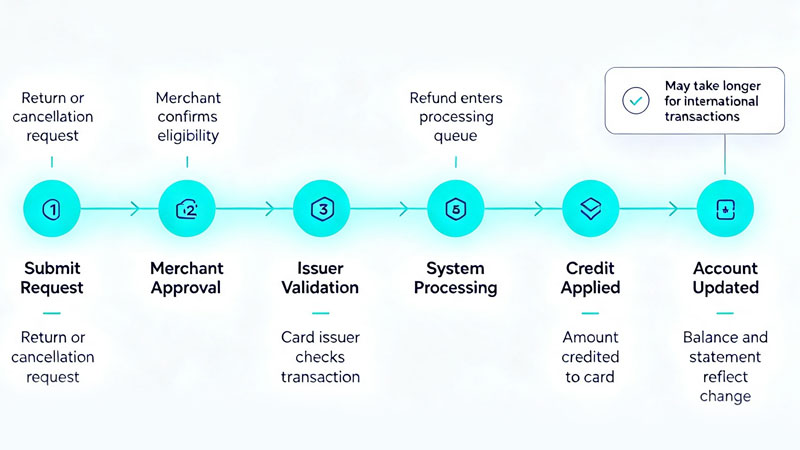
How the Refund Timeline Actually Works
Most guides say refunds take “a few days to a few weeks,” which isn’t very useful. Here’s what actually happens:
- Day 0: Merchant approves the refund
- Day 1–2: Merchant’s bank sends the funds
- Day 3–7: Funds reach your card issuer
- Day 5–14: Money posts to your account
The merchant pays an interchange fee on this process — you don’t. That’s one reason some businesses drag their feet on refunds instead of processing them immediately.
Why Refund Speed Varies by Card Network
Visa, Mastercard, American Express, and Discover each set their own guidelines for how fast a refund should post once a merchant initiates it. [Visa’s official merchant dispute resolution rules] give merchants a clear settlement window, but your bank’s own processing adds extra days on top. If a refund takes longer than 14 business days, that’s your signal to call the merchant directly — something is stuck.
What Is a Credit Card Reversal?
A reversal cancels a transaction before it ever settles. No money leaves your account, so there’s nothing to “return” — the charge simply disappears from pending.
Authorization Reversal vs. Void: Not the Same Thing
These two get confused constantly. A void happens when the merchant actively cancels the charge on their end before it batches out. A reversal can happen automatically — triggered by the bank, the card network, or a fraud filter — without the merchant doing anything.
Think about a gas station hold. You swipe your card, and it authorizes $100 as a security hold. You only pump $40. The unused $60 reverses automatically once the final amount posts — no one clicked a button. That’s a reversal, not a void.
What Triggers a Reversal
- Merchant caught a pricing error before the charge posted
- Item went out of stock during checkout
- Suspected fraud flagged the transaction
- Duplicate charge detected by the processor
- Cross-border purchase with a currency conversion mismatch
That last one trips people up. If you buy something in euros and the transaction reverses before settlement, the reversed amount can differ slightly from the original hold because of exchange rate movement between authorization and reversal. It’s small, but it’s real, and almost nobody explains it.
Where Does a Chargeback Fit In?
Reversals and refunds happen when everyone agrees something went wrong. A chargeback is what happens when they don’t.
The Escalation Path, Step by Step
- You spot a charge you don’t recognize or a merchant that won’t help
- You contact the merchant first — this step matters, skipping it can weaken your case
- Merchant refuses or doesn’t respond within a reasonable window
- You file a dispute directly with your card issuer
- Issuer investigates and assigns a reason code
- Issuer either reverses the charge permanently or denies the claim
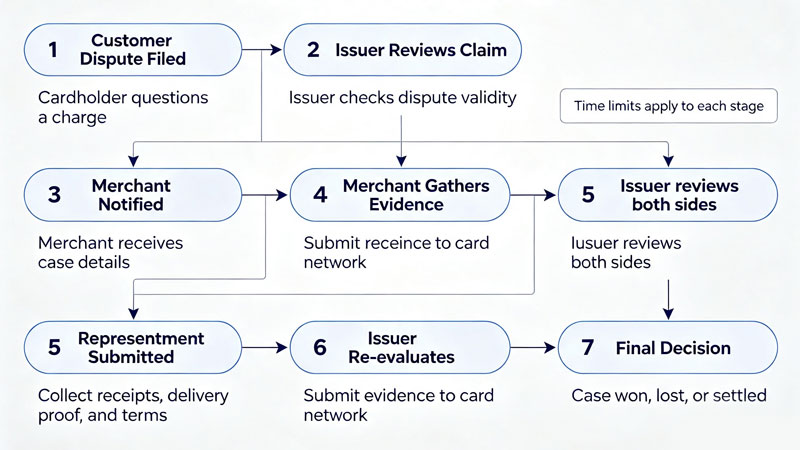
how to file a credit card dispute step by step
Dispute Reason Codes Actually Matter
Visa and Mastercard both classify chargebacks into categories like fraud, processing errors, and consumer disputes, each with its own evidence requirements and time limits. Under the [Visa Claims Resolution framework], a fraud-coded dispute moves faster than a “product not as described” dispute, which needs documentation from both sides. Knowing which category your issue falls under changes how quickly you’ll see your money.
Does a Reversal or Refund Affect Your Credit Score?
No — neither one touches your credit report on its own. Credit scoring models like FICO and VantageScore track your balance, payment history, and utilization, not individual transaction reversals.
Here’s where it gets tricky: if a dispute drags on and you stop paying your card balance while it’s unresolved, that unpaid balance can eventually get reported as late. The reversal itself is invisible to your credit file — the fallout from a mishandled dispute isn’t.
Your Consumer Protection Rights
This is the part most guides skip entirely, and it’s the part that actually protects you.
The Fair Credit Billing Act (FCBA)
The FCBA gives you 60 days from your statement date to dispute a billing error in writing. Verbal disputes alone don’t trigger the same legal protections — put it in writing, every time. The [外链建议:Consumer Financial Protection Bureau’s guide to disputing credit card charges → CFPB官网信用卡争议指南] spells out exactly what counts as a qualifying error.
Credit Cards vs. Debit Cards: Different Rules Apply
If you’re using a debit card instead, Regulation E — not the FCBA — governs your dispute. The protection window is shorter, and your liability for unauthorized charges can be higher if you report late. This distinction rarely gets mentioned, but it changes how fast you need to act.
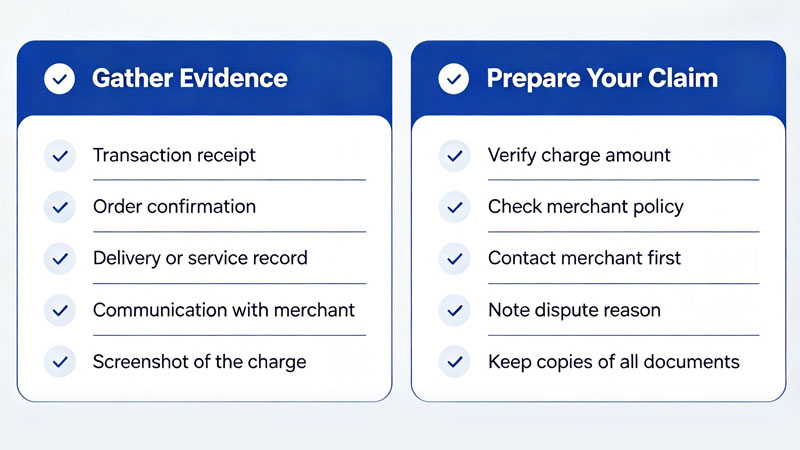
How to Dispute a Charge: A Practical Checklist
- Contact the merchant first, in writing, and keep a copy
- Screenshot the order confirmation, item description, and any chat logs
- Note the exact date, amount, and merchant name from your statement
- If unresolved within 5–7 days, call your card issuer
- File the dispute within the 60-day FCBA window
- Save your issuer’s confirmation number
- Check your statement in the next billing cycle to confirm resolution
For Business Owners: Reducing Reversals Without Losing Customers
If you run a business, reversals and refunds aren’t just customer service issues — they hit your bottom line directly.
Track your return rate against your total transaction volume monthly. If returns climb above your industry average, look at your product descriptions first — mismatched expectations cause more disputes than actual defects. Layer in AVS (Address Verification Service) and 3D Secure authentication on higher-risk transactions to cut down on friendly fraud before it becomes a dispute you have to fight.
FAQ
Can a transaction be both reversed and refunded?
No. A reversal only applies before settlement. Once a charge settles, you’re in refund territory — the two don’t overlap on the same transaction.
How long does a credit card reversal take to show on my statement?
Usually 1–3 business days, since no funds actually moved and there’s nothing to route back through the banking system.
What happens if a merchant refuses to issue a refund?
Document everything, then escalate to your card issuer as a formal dispute. You have 60 days from the statement date under the FCBA to do this.
Is a reversal the same as a canceled transaction?
Functionally, yes — the charge never completes and no money changes hands. The term “reversal” just describes how the cancellation happens on the back end.
Do international purchases follow different reversal rules?
The core process is the same, but currency conversion timing can cause the reversed amount to differ slightly from the original authorized amount.
Disclaimer: This article is for informational purposes only and does not constitute financial, legal, or investment advice. Dispute rules and timelines can vary by card issuer and jurisdiction. Consult a licensed financial advisor or your card issuer directly for guidance specific to your situation.