

You check your bank balance and your chest tightens — even though your bills are paid. That reaction has nothing to do with math. A healthy relationship with money isn’t about how much you earn. It’s about how your brain reacts to it. This guide breaks down why, and gives you a real framework to fix it.
What Does a Healthy Relationship With Money Actually Mean?
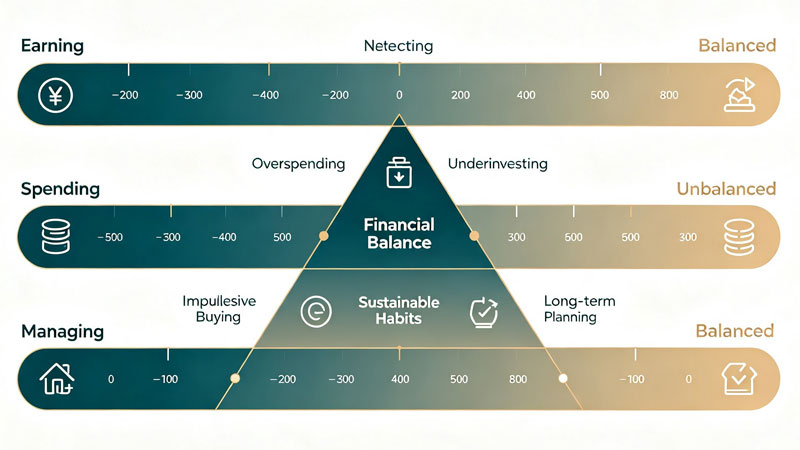
Forget the idea that a healthy relationship with money means having a certain income or a perfect credit score. It doesn’t. Financial therapists define it across three behavior patterns: how you acquire money, how you spend it, and how you manage it day to day.
You can earn $250,000 a year and still have an unhealthy relationship with money if you compulsively check your portfolio or feel panic every time you swipe a card. You can earn $60,000 and feel completely secure. The dollar amount is not the variable that matters. Your behavior is.
Financial Stress vs. Financial Trauma — They’re Not the Same Thing
Financial stress is situational. Your car breaks down, you feel stressed, then it passes. Financial trauma is different. It’s a pattern formed early — often in childhood — that keeps firing long after the original threat is gone. Someone who grew up watching parents fight about overdue bills might grow into an adult who hoards cash out of fear, even with six figures in savings.
The [Financial Therapy Association] treats this as a legitimate clinical pattern, not just a personality quirk. If checking your accounts triggers real physical anxiety — racing heart, nausea, avoidance — that’s a signal worth taking seriously, not shaming yourself over.
Where Do You Fall on the Money Mindset Spectrum?
Before you can fix anything, you need an honest read on where you actually stand. Most people assume they’re “bad with money” without knowing which specific pattern they’re stuck in.
8 Signs You Might Have an Unhealthy Relationship With Money
- You avoid opening banking apps or checking your balance
- You feel a rush of relief, then guilt, after spending
- You save compulsively even when you can afford to spend
- You use money to earn approval or love from others
- You feel shame discussing money with a partner or family
- You make big purchases impulsively during stress or sadness
- You equate your net worth with your personal value
- You avoid financial planning entirely, even simple budgeting
If three or more of these sound familiar, you’re not broken — you’re pattern-matching a script you likely picked up before age 12.
take our free money mindset assessment
Why Your Relationship With Money Looks the Way It Does
Childhood Money Scripts Still Run the Show
Financial psychologist Dr. Brad Klontz identified four dominant “money scripts” that form in childhood and repeat in adulthood: money avoidance, money worship, money status, and money vigilance. None of these are moral failings. They’re survival strategies that made sense once and stopped being useful decades ago.
If your family treated money as something dangerous or shameful, you likely developed avoidance. If money was tied to worth and status growing up, you may chase it compulsively as an adult — never feeling like enough is enough.
Culture and Background Shape Your Money Beliefs Too
Money scripts aren’t universal. Someone raised in a collectivist household, where income is shared across generations, will relate to saving and spending very differently than someone raised to prioritize individual independence. Neither is wrong. But pretending everyone should follow the same “one size fits all” advice ignores this completely — and it’s part of why so much generic financial content doesn’t stick.
How to Build a Healthy Relationship With Money: 5 Practical Steps
Step 1 — Stop Comparing Your “Enough” to Someone Else’s
Comparison isn’t just unhelpful — it’s mathematically impossible to win. There will always be someone with a bigger house or a newer car. The fix isn’t ignoring your feelings about it. It’s naming the trigger the moment it happens, then asking one question: “Does this actually match what I value, or am I reacting to someone else’s life?”
Step 2 — Get Your Financial Education From Reliable Sources
Financial advice on social media is often unlicensed, unvetted, and built for engagement, not accuracy. The [consumer financial education resources] regularly warns consumers to verify credentials before following financial advice online. Look for CFP® professionals or resources tied to accredited institutions, not just large follower counts.
Step 3 — Pick a Budgeting System That Fits Your Personality
Most people fail at budgeting because they copy a method that doesn’t match how their brain works. Compare before you commit:
| Method | Best For | Strength | Watch Out For |
|---|---|---|---|
| Zero-Based Budgeting | High-anxiety planners who want full control | Every dollar has a job | Time-intensive to maintain |
| 50/30/20 Rule | Budgeting beginners | Simple, flexible | Too loose for debt payoff |
| Cash Envelope System | Visual, tactile learners | Hard to overspend | Inconvenient for digital spenders |
| Pay-Yourself-First | People who want simplicity | Automates saving first | Doesn’t address overspending root cause |
compare budgeting apps side by side
Step 4 — Give Yourself Permission to Spend Without Guilt
Restriction breeds rebellion. If your budget has zero room for joy, you’ll eventually blow past it out of resentment. Build in a guilt-free spending category — even a small one — and treat it as a planned expense, not a failure.
Step 5 — Talk About Money With the People Who Matter
Money secrecy destroys relationships faster than money mistakes do. Start small: “Can we set 20 minutes this month to talk about our savings goals?” is far more effective than an ambush conversation during a stressful moment.

When to Talk to a Financial Therapist vs. a Financial Advisor
These roles get confused constantly, and picking the wrong one wastes time and money.
| Financial Therapist | Financial Advisor | |
|---|---|---|
| Focus | Emotional patterns, money trauma, behavior | Investments, retirement, tax strategy |
| Credentials | Licensed therapist + financial training (CFT-I™) | CFP®, CFA, or similar |
| Best for | Anxiety, compulsive spending, money shame | Portfolio building, retirement planning |
| Session focus | “Why do I feel this way about money?” | “What should I do with this money?” |
If your issue is behavioral, start with a therapist. If your issue is strategic, start with a fee-only advisor. Many people eventually need both.
FAQ: Common Questions About Building a Healthy Money Mindset
Can your relationship with money actually change as an adult?
Yes. Money scripts formed in childhood aren’t permanent. Consistent awareness and new habits — often over 6-12 months — can meaningfully shift compulsive or avoidant patterns.
How do I stop emotional or stress spending?
Add a 24-hour pause before non-essential purchases over a set dollar amount. This interrupts the impulse-reward loop without requiring willpower alone.
Is it normal to feel anxious just checking my bank account?
It’s common, but not something to normalize long-term. Persistent anxiety around routine financial tasks is worth discussing with a financial therapist.
What’s the difference between being frugal and having financial trauma?
Frugality is a conscious choice that doesn’t cause distress. Financial trauma involves fear-driven behavior that persists even when there’s no real financial threat.
Key Takeaways
- A healthy relationship with money is measured by behavior, not income
- Self-awareness through assessment beats guessing at what’s “wrong” with you
- Budgeting systems should match your personality, not a generic template
- Know whether you need a financial therapist, an advisor, or both
Disclaimer: This article is for educational purposes only and does not constitute financial, investment, tax, or psychological advice. Individual financial situations vary — consult a licensed financial advisor, CFP® professional, or financial therapist before making significant financial or emotional decisions.