

Figuring out how to save 100k feels impossible until you see the actual math. Most guides skip the numbers and hand you a pep talk instead. This one doesn’t. Below you’ll find real contribution timelines, current tax limits, and the account strategy that turns your first $100k into your fastest $100k.
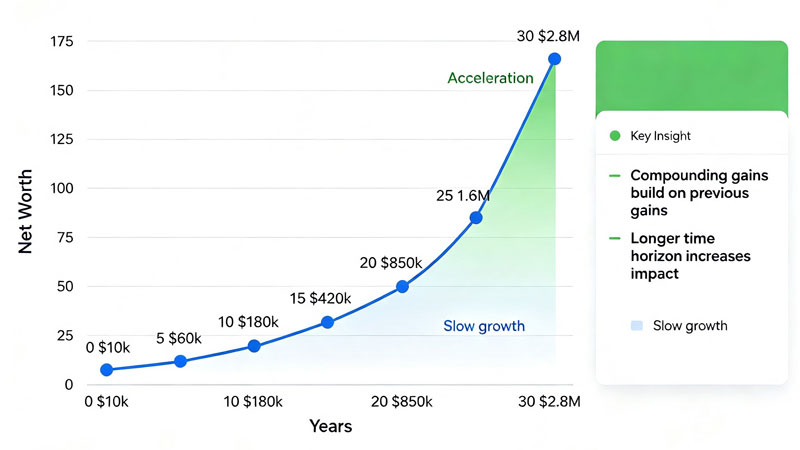
How Much Do You Need to Save Each Month to Reach $100k?
The answer depends on two variables: your monthly contribution and where you park the money. Cash sitting in a checking account grows at 0%. Money invested at a 7% average annual return does the heavy lifting for you.
| Monthly Savings | Years to $100k (0% return) | Years to $100k (7% return) |
|---|---|---|
| $500 | 16.7 years | 11.6 years |
| $1,000 | 8.3 years | 6.9 years |
| $1,500 | 5.6 years | 5.1 years |
| $2,000 | 4.2 years | 4.0 years |
| $2,500 | 3.3 years | 3.2 years |
historical S&P 500 average annual return data
How to Save 100k in 5 Years
To hit $100k in five years starting from zero, you need roughly $1,450 a month at a 7% return. That’s a real number, not a wish. It requires a household income that supports this savings rate after taxes, housing, and basic living costs — realistically $90k+ for most single earners in a mid-cost city.
Net Worth by Age: How to Save 100k by 30, 40, or 50
Starting point matters more than most articles admit. Someone starting at 22 has a very different math problem than someone starting at 35 with existing debt.
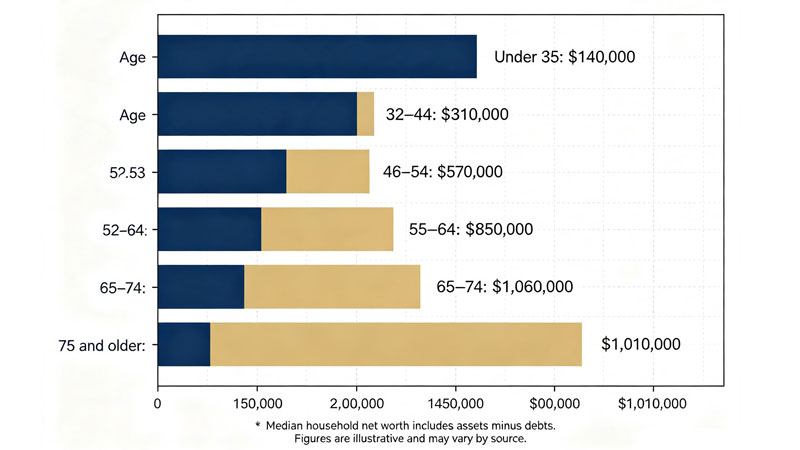
[E-E-A-T embed: cite most recent Federal Reserve Survey of Consumer Finances data on net worth by age]
Why the First $100k Is the Hardest (The Actual Math)
Compound interest doesn’t feel real until you graph it. In year one, your investment returns are small — a few hundred dollars on a modest balance. By year eight or nine, those returns start rivaling your monthly contributions. That’s the inflection point people mean when they call the first $100k “the hardest.”
Nominal returns aren’t the whole story either. Inflation quietly eats into purchasing power every year, so your real return is lower than the headline number suggests.
[E-E-A-T embed: cite current CPI inflation rate from BLS]
Step 1: Build Your Foundation Before You Chase $100k
Skipping this step is the single biggest mistake in most “how I saved $100k” stories. An emergency fund isn’t optional — it’s what keeps a job loss from wiping out two years of progress.
Emergency Fund First, Aggressive Saving Second
Aim for three to six months of essential expenses in a high-yield savings account before you accelerate investing. Dual-income households can lean toward three months. Single-income or freelance earners need closer to six.
Should You Pay Off Debt or Save $100k First?
Compare your debt’s interest rate to expected investment returns. Credit card debt above 15% APR wins every time — pay it down first. A 4% student loan or mortgage is a different calculation; you can often save and pay minimums simultaneously.
debt payoff calculator and strategy comparison
Step 2: Maximize Tax-Advantaged Accounts
This is where most competing guides get vague or outdated. Contribution limits change every year, and using last year’s numbers can cost you real money.
Current Contribution Limits (Verify Annually)
| Account | 2026 Limit |
|---|---|
| 401(k) | Check current IRS.gov figure |
| IRA / Roth IRA | Check current IRS.gov figure |
| HSA (family) | Check current IRS.gov figure |
official annual contribution limit updates
Traditional vs. Roth: Which Builds Your $100k Faster?
Traditional accounts lower your taxable income now; Roth accounts grow completely tax-free later. If you expect your tax rate to rise over your career, Roth usually wins. If you’re in a high tax bracket now and expect a lower one in retirement, Traditional often makes more sense.
Don’t Leave Employer Match on the Table
An employer 401(k) match is an immediate, guaranteed return no investment can beat. Check your vesting schedule, though — some employers require you to stay a set number of years before that match is fully yours.
Step 3: Choose the Right Investment Accounts
Brokerage vs. Retirement vs. High-Yield Savings
| Account Type | Liquidity | Tax Treatment | Best For |
|---|---|---|---|
| High-Yield Savings | High | Taxable interest | Emergency fund, short-term goals |
| Taxable Brokerage | High | Capital gains tax | Flexible, mid-term investing |
| 401(k) / IRA | Low (penalties before 59½) | Tax-advantaged | Long-term retirement growth |
[E-E-A-T embed: cite current average high-yield savings APY range from an FDIC or rate-tracking source]
A Word on Risk
Chasing individual stock picks during a market dip isn’t a repeatable strategy — it’s timing luck. Diversified index funds carry less risk and a stronger long-term track record than picking winners during a crash.
This article is educational, not personalized investment advice. Talk to a fee-only fiduciary advisor before making major account decisions.
Step 4: Increase Your Savings Rate
Cut Expenses Where It Actually Matters
Housing, transportation, and food account for the majority of most household budgets. Trimming subscriptions helps at the margins, but shrinking your rent or car payment moves the needle far more.
average US household spending breakdown by category
Grow Your Income — It Has No Ceiling
Expense cuts have a floor. Income growth doesn’t. A side hustle, a certification, or a job change often outperforms years of extreme frugality.
Saving $100k for a House Down Payment
This goal needs a shorter timeline and lower risk tolerance than retirement savings. Keep this money in high-yield savings or short-term CDs, not the stock market — you can’t afford a downturn right before closing.
down payment savings timeline by home price
What If You Don’t Have a High Starting Income?
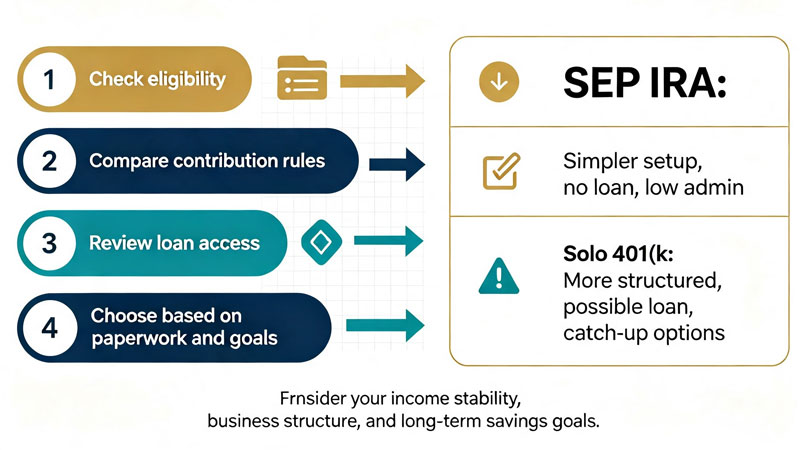
Most viral “$100k by 25” stories involve rent-free living or no student debt. That’s not most people’s reality, and it shouldn’t discourage you. Freelancers can use a SEP IRA or Solo 401(k) to get similar tax advantages without a traditional employer.
Common Mistakes That Slow You Down
- Inflating spending every time you get a raise
- Picking individual stocks instead of diversifying
- No tracking system, so you can’t see slow progress
- Ignoring expense ratios on investment funds
Frequently Asked Questions
Is saving $100k by 25 realistic for the average person?
Not without a high income, no debt, or low living costs. It’s achievable, just not typical — most people hit this milestone in their early-to-mid thirties.
How much should I have saved by 30?
Benchmarks vary by income, but many financial planners suggest roughly one year’s salary saved by 30 as a healthy target.
Should I invest my $100k or keep it in savings?
Depends on your goal’s timeline. Money you need within three years belongs in savings. Longer-term money benefits from investing.
What’s the fastest way to save $100k without a six-figure salary?
Combine a high savings rate, employer 401(k) match, and consistent investing over 5–7 years. Income growth accelerates the timeline more than expense cuts alone.
Key Takeaways
Saving $100k isn’t about willpower alone — it’s a math problem you can solve with the right account structure and a realistic timeline. Build your emergency fund, maximize tax-advantaged accounts, invest consistently, and let compound interest do the rest.
Disclaimer: This article is for informational and educational purposes only. It does not constitute financial, investment, tax, or legal advice. Contribution limits, interest rates, and tax rules change annually — verify current figures with official sources. Consult a licensed financial advisor, CPA, or fiduciary before making financial decisions based on your personal circumstances.