

Most people don’t struggle to save because they lack discipline. They struggle because they never picked a real target. “Stuff to save up for” isn’t a wish list — it’s a plan with a dollar amount and a deadline attached. This guide gives you both, plus the account type that fits each goal.
Why Picking a Real Goal Changes Everything
Vague savers quit. Specific savers don’t. Research on goal-setting consistently shows that people save more when they attach a number and a date to their target, rather than a general intention to “save more.” [Research data on how concrete goals increase savings success rates]
There’s also a simple psychological trick behind this: mental accounting. When you label a chunk of money “vacation” or “emergency fund,” you’re far less likely to spend it on something else. A generic savings balance has no such protection.

How Much Should You Save Each Month?
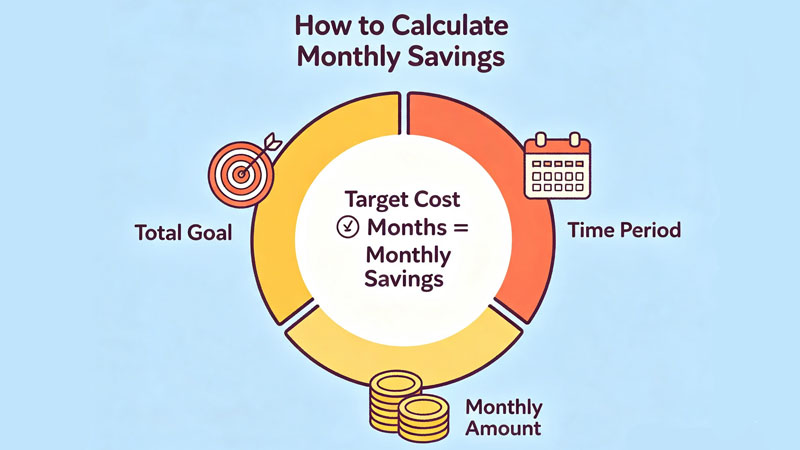
Before picking from the list below, do the math. The formula is simple:
Goal Cost ÷ Timeline (months) = Monthly Savings Target
Example: A $6,000 wedding fund, saved over 20 months, means setting aside $300 a month. No guesswork.
The 50/30/20 rule (50% needs, 30% wants, 20% savings) still works as a starting split, but it’s a template — not a rule for your specific goal. If your goal has a hard deadline, back into the number instead.
Short-Term Goals to Save Up For (0–2 Years)
These are the goals that keep life running smoothly and give you quick wins.
Emergency Fund (Save This First)
Before anything else on this list, build a cushion of 3–6 months of essential expenses. This isn’t optional. It’s the difference between a setback and a crisis. [Recommended months of expenses for an emergency fund]
Vacations and Travel
Even planning a trip boosts mood before you leave. Average domestic trips run $1,500–$3,000 per person depending on distance and length.
New Electronics
A laptop upgrade or better work setup often pays for itself through productivity, not just enjoyment.
Wedding Fund
Average U.S. wedding costs landed around $34,000 in 2025. Save toward a number you’ve actually budgeted, not the average.
Holiday and Gift Budget
Americans spend close to $900 per person each holiday season. Saving monthly beats scrambling in December.
Car Repair Reserve
A dedicated fund of $500–$1,000 keeps a flat tire from becoming a credit card balance.
Mid-Term Goals to Save Up For (2–5 Years)
Home Down Payment
This is the single biggest savings goal most adults tackle. With home prices still climbing in many markets, starting early matters more than starting big. [How to Calculate How Much Down Payment You Need for a House]
Starting a Business
Cash flow problems remain the top reason small businesses fail. A savings buffer before launch reduces that risk significantly.
New or Used Car
Decide the budget before you shop, not at the dealership.
Home Renovation
Major renovations range from $20,000 to well over $100,000. Save toward the specific project, not a vague “someday” fund.
Skill Certifications or Further Education
This one gets skipped constantly, but a certification that raises your income is one of the highest-ROI things you can save for as an adult.
Long-Term Goals to Save Up For (5+ Years)
Retirement
If your employer offers a 401(k) match, that’s the first dollar to save — it’s free money. Beyond that, IRA and Roth IRA limits change yearly, so check current figures before setting your contribution target. [Latest IRA and 401(k) Contribution Limits]
Children’s Education Fund
A 529 plan grows tax-free when used for qualified education costs — a real advantage over a plain savings account for this specific goal.
Investment Property
This is a long game. Down payment, reserves for repairs, and vacancy periods all need separate line items.
Lifestyle Goals Worth Saving For
- Pet care — annual costs run $1,400–$5,000+ depending on the animal and its health needs
- Hobbies — gear for a hobby you’ll actually use beats impulse buys you won’t
- Health and wellness — a quality mattress or gym membership is a health investment, not a luxury
- Special occasions — birthdays and anniversaries deserve a small dedicated fund, not last-minute stress spending
Which Account Fits Which Goal?
Not every dollar belongs in the same place. Here’s the breakdown:
| Goal Type | Timeline | Best Account | Liquidity | Risk |
|---|---|---|---|---|
| Emergency fund | 0–1 yr | High-yield savings | High | None |
| Vacation/Wedding | 1–2 yrs | High-yield savings | High | Low |
| Home down payment | 3–5 yrs | HYSA / CDs | Medium | Low |
| Retirement | 10+ yrs | 401(k) / IRA | Low | Medium-High |
For anything under five years, a high-yield savings account beats a traditional bank account by a wide margin — the difference in APY compounds fast on money you’re not touching.
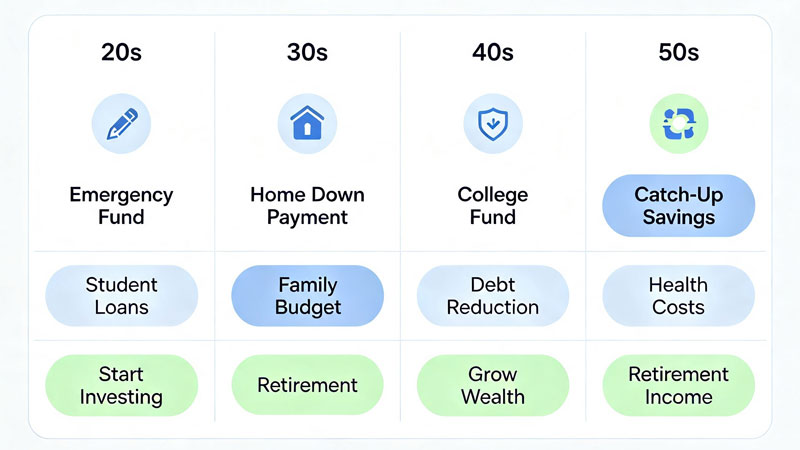
Savings Priorities by Age
| Life Stage | Primary Focus | Secondary Focus |
|---|---|---|
| Late 20s | Emergency fund, career skills, travel | First car, wedding |
| 30s | Home down payment, retirement | Kids’ education fund |
| 40s | Retirement catch-up, renovation | College fund, elder care reserve |
Why You Keep Failing to Save — and How to Fix It
Two mistakes cause most savings plans to collapse:
Too many goals at once. Splitting focus across five goals with no ranking usually means none of them get funded properly. Rank them. Fund the top one first.
Ignoring inflation. A goal you set three years ago at $10,000 may need to be $11,000 today to buy the same thing. Revisit your number annually, not just your progress.
The fix is a simple waterfall: emergency fund first, high-interest debt second, short-term goals third, long-term goals last.
FAQ
What are good short-term savings goals?
An emergency fund, a vacation, and a car repair reserve. These give quick wins and build the habit before you tackle bigger targets.
How much should I have saved by age 30?
A common benchmark is one year’s salary saved and invested, though this varies widely by income, location, and debt load.
Should I save for multiple goals at once?
Yes, but rank them first. Fund your emergency fund fully before splitting money across other goals.
Is it better to save or invest for a goal 5+ years away?
For goals five or more years out, many people choose to invest part of the fund rather than keep it all in cash, since inflation erodes idle savings over time. This depends on your risk tolerance and timeline.
What if I keep failing to stick to my savings plan?
Automate the transfer on payday. Removing the decision removes the temptation to skip it.
The Bottom Line
A real savings goal has three parts: a dollar amount, a deadline, and the right account. Pick one goal from this list, run the math, and automate the transfer this week. That’s the entire system.
Disclaimer: This article is for informational purposes only and does not constitute financial, investment, or legal advice. Savings needs vary by individual circumstances. Consult a licensed financial advisor before making major financial decisions.