

Can a Canadian buy a house in the US? Yes. No visa, no green card, no citizenship required. But here’s what most guides skip: the withholding tax you’ll face when you sell, the reporting duties waiting for you back home, and how a six-cent currency swing can quietly cost you tens of thousands. This guide covers all three.
Can Canadians Legally Buy Property in the US?
The legal answer is straightforward. Canadians can purchase, own, and sell US real estate with zero restrictions on nationality. You don’t need a Social Security number to close a deal. You don’t need to live in the country.
What you do need is an ITIN (Individual Taxpayer Identification Number) once rental income or a future sale enters the picture, a title company to handle the closing, and a bank account that can move funds across the border without bleeding fees.
What Buying a House Does NOT Give You
Owning property is not a path to residency. It doesn’t extend your visitor status. Under the standard B1/B2 visitor rules, Canadians can still only stay in the US up to 180 days per year without additional immigration status — owning a house changes none of that.
US Customs and Border Protection visitor stay rules
Why Canadians Are Buying US Real Estate Right Now
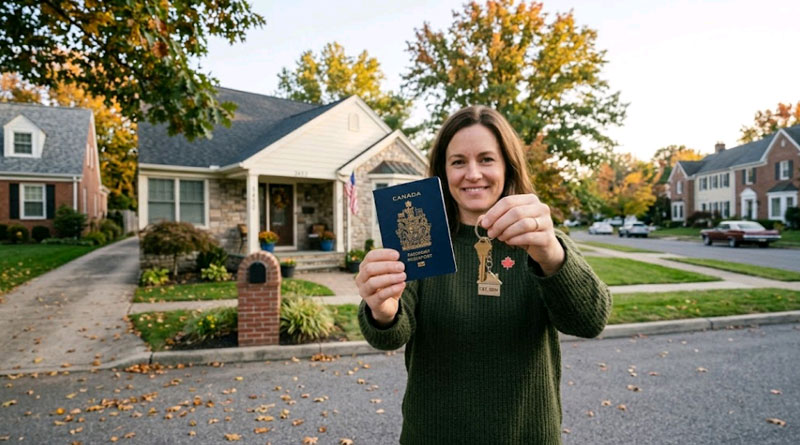
Three drivers show up again and again: winters, retirement math, and rental yield. Florida and Arizona absorb most of the snowbird demand. Tennessee and North Carolina attract buyers chasing lower property taxes and cheaper entry prices. Coastal markets pull in investors betting on long-term appreciation.
The Exchange Rate Advantage — And Its Risk
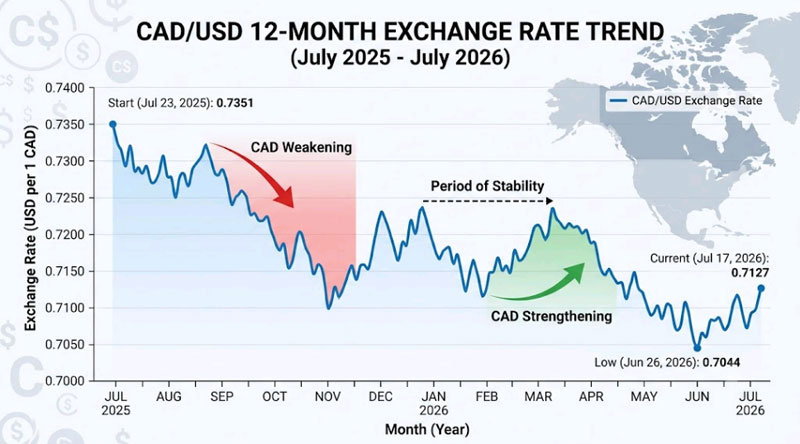
A weaker Canadian dollar against the USD sounds like bad news, but it also means US assets have, at times, been cheaper for Canadian buyers holding CAD savings. The catch: that same volatility works against you if the rate moves the wrong way between your offer and your closing date. A property doesn’t wait for a good exchange rate. Your closing date does.
Where Canadians Are Buying: A Data Snapshot
| State | Entry-Level Price Range | State Income Tax | Foreign Buyer Restrictions | Best For |
|---|---|---|---|---|
| Florida | Moderate–High | None | None | Snowbirds, retirees |
| Arizona | Moderate | Yes | None | Seasonal living |
| Texas | Moderate | None | None | Investment, relocation |
| North Carolina | Moderate | Yes | None | Long-term retirees |
| California | High | Yes (high) | None | Appreciation-focused buyers |
Pricing bands reflect general 2026 market conditions and vary significantly by city and neighborhood.
Step-by-Step: How to Buy a House in the US as a Canadian
Step 1 — Set a Real Budget, Not Just a Price Target
Your number needs to include the purchase price, closing costs (typically 2-5%), property tax, insurance, and a currency buffer. Skip the buffer and a bad exchange rate week can eat your contingency fund.
Step 2 — Can a Canadian Get a Mortgage in the US?
Yes, but the rules differ sharply from what you’re used to at home.
| Requirement | US Resident Buyer | Canadian Non-Resident Buyer |
|---|---|---|
| Down payment | As low as 3-5% | Typically 30-35% |
| Credit history | US credit score used | US score often not recognized; alternative docs required |
| Mortgage term | 15-30 year fixed common | Often shorter or requires cross-border lender program |
| Rate premium | Standard market rate | Often 0.5-1% higher |
Banks like RBC Bank USA and TD run dedicated cross-border mortgage programs built specifically for this gap. Ask about them before assuming you’ll need an all-cash purchase.
comparing cross-border mortgage lenders for Canadian buyers
Step 3 — Build a Team That Actually Understands Cross-Border Deals
You need a realtor, a real estate attorney, and — this is the one people skip — a CPA licensed to handle both US and Canadian tax filings. A domestic-only accountant will miss half the obligations described below.
Step 4 — Inspection, Title Search, and Escrow
Standard due diligence applies: home inspection, title search, and an escrow account holding your deposit until closing. Nothing exotic here, but skipping the title search on an out-of-state purchase is how buyers inherit someone else’s lien.
Step 5 — Move the Money
This is where currency strategy meets contract deadlines. More on that below.
The Tax Reality Nobody Explains Clearly
While You Own It
Rental income earned on US property must be reported to the IRS, typically via Form 1040-NR, regardless of whether you ever set foot in the property that year.
IRS guidance for nonresident alien rental income
When You Sell: FIRPTA Withholding Tax
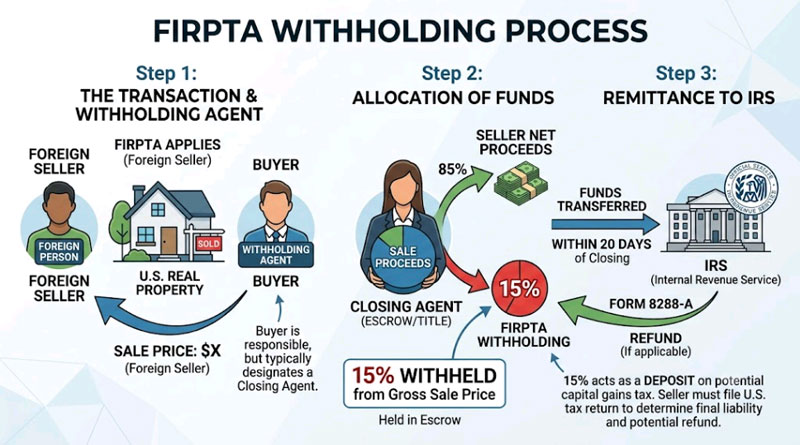
Here’s the part almost no guide covers in real numbers. Under FIRPTA (Foreign Investment in Real Property Tax Act), the buyer’s closing agent must withhold 15% of the gross sale price — not the profit, the full price — and send it to the IRS at closing.
Sell a $600,000 property and $90,000 gets withheld before you see a cent, even if your actual gain was far smaller. You can apply for a withholding certificate in advance to reduce that number, but it takes weeks to process, so timing matters.
Cross-Border Estate Tax — The Risk Nobody Mentions
If you own US property and pass away, the US estate tax exemption for non-residents is just $60,000 — compared to over $13 million for US citizens. A Canadian holding a $700,000 Florida condo could leave heirs facing a US estate tax bill most families never see coming. The Canada-US tax treaty offers some relief, but it requires proactive planning, not an afterthought.
Reporting Back Home: T1135
The CRA requires Canadian residents to file Form T1135 if the cost of foreign property, including US real estate, exceeds $100,000 CAD. Miss this filing and penalties stack up fast — this is a compliance step, not a suggestion.
guide to filing CRA foreign property disclosure T1135
A note on tax matters: the details above are general information, not tax advice. FIRPTA rates, estate tax treaty relief, and T1135 thresholds all depend on your specific situation. Talk to a cross-border CPA before you list or buy.
How Exchange Rates Impact Your Total Purchase Cost
A Real Example
| USD Property Value | Exchange Rate | CAD Cost |
|---|---|---|
| $500,000 | 1.34 | $670,000 |
| $500,000 | 1.38 | $690,000 |
| $500,000 | 1.42 | $710,000 |
That eight-cent move costs you $40,000 CAD on the same house. Nothing about the property changed. Only the timing of your transfer did.
Banks vs. Currency Specialists
| Feature | Traditional Bank | FX Specialist |
|---|---|---|
| Exchange rate markup | Often 2-4% above market | Usually under 1% |
| Wire fees | $30-50 plus hidden spread | Transparent, often lower |
| Transfer speed | 2-5 business days | Often same-day to next-day |
| Rate lock options | Rare | Common for large transfers |
Hidden and Ongoing Costs Buyers Underestimate
- Hurricane and flood insurance in coastal states, which has risen sharply in Florida and parts of Texas in recent years
- HOA fees that can run several hundred dollars monthly in managed communities
- Cross-border banking fees on routine transfers for tax and utility payments
- Property management costs if the home sits vacant part of the year
Insurance Information Institute report on rising coastal insurance costs
Common Mistakes Canadian Buyers Make
- Assuming a 20% down payment applies, when non-resident lenders often ask for 30-35%
- Forgetting FIRPTA exists until the closing table, when it’s too late to plan around it
- Skipping the T1135 filing because “it’s a US property, not a Canadian one”
- Wiring a large deposit through a regular bank without comparing rates first
- Not drafting a US-specific will, leaving heirs to navigate probate in a second country
Frequently Asked Questions
Can a Canadian buy a house in the US without a visa?
Yes. Property ownership has no visa requirement and doesn’t affect your visitor status.
Do I need to pay US tax on rental income from my American property?
Yes, rental income must be reported to the IRS on Form 1040-NR, regardless of your residency status.
What is FIRPTA and how much gets withheld when I sell?
FIRPTA requires 15% of the gross sale price to be withheld at closing and sent to the IRS, though a withholding certificate can reduce this amount if filed in advance.
Does owning US property change my Canadian tax residency?
No, but it does create a CRA reporting obligation under Form T1135 once the property’s cost exceeds $100,000 CAD.
Can I get a 30-year fixed mortgage as a non-resident?
Some cross-border lender programs offer long-term fixed rates, but down payment requirements are typically much higher than for US residents.
Final Thoughts
Buying US property as a Canadian is entirely doable — thousands do it every year. The buyers who avoid regret are the ones who plan for the tax paperwork, the exchange rate timing, and the eventual sale before they sign anything. Treat this as a cross-border financial decision, not just a real estate one.
Disclaimer: This article is for general informational purposes only and does not constitute tax, legal, or financial advice. Rules around FIRPTA, estate tax treaties, mortgage qualification, and CRA reporting vary by individual circumstance. Consult a licensed cross-border CPA, real estate attorney, or financial advisor before making a purchase decision.