
If you’re searching for how to stop being broke, you’ve probably already tried a budget app or two. They didn’t stick. That’s not a willpower problem. It’s a systems problem. This guide breaks down the real math behind why you’re stuck, and gives you a 90-day plan to fix it.

Why “Being Broke” Isn’t Always About Income
Most people assume being broke means not earning enough. Sometimes that’s true. More often, it’s a leak problem, not a supply problem.
A 2023 Federal Reserve survey found that roughly one in three U.S. adults couldn’t cover an unexpected $400 expense using cash or its equivalent. Federal Reserve economic well-being report Many of these households had steady jobs. What they lacked was a system that caught money before it disappeared.
Broke vs. Poor vs. Cash-Flow Negative
These terms get used interchangeably, but they describe different problems:
- Broke — temporary. Your cash flow is negative this month, but your long-term earning potential is fine.
- Poor — structural. Income consistently falls short of basic needs over years, not months.
- Cash-flow negative — a timing issue. Money comes in, but bills hit before the paycheck does.
Knowing which one applies to you changes the fix. A cash-flow problem needs a buffer. A structural income problem needs a bigger career move. Confusing the two is why so much generic advice fails.
The Income-Happiness Myth, Corrected
You’ve probably heard that money stops making you happier past $75,000 a year. That claim comes from a 2010 Kahneman and Deaton study. A 2021 study by Matthew Killingsworth found the opposite: happiness keeps rising with income, with no clear plateau, for most people. [Killingsworth income happiness study]
The point isn’t “chase more money at any cost.” It’s this: don’t let outdated advice talk you out of pursuing a raise or a better job because you read somewhere that money stops mattering. It doesn’t.
The Real Reasons You’re Living Paycheck to Paycheck
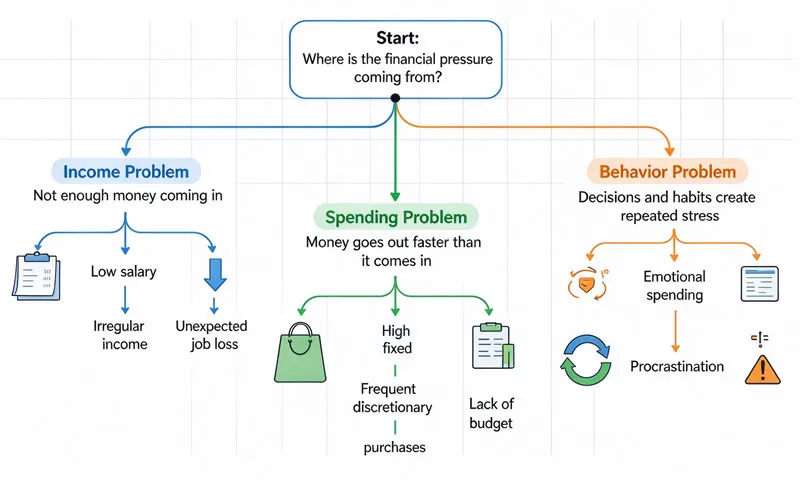
Living paycheck to paycheck solutions only work once you’ve named the actual leak. Run through this list honestly.
No Working Budget
Most budgets fail within 90 days. Not because people are lazy, but because the budget was too strict on day one. A workable budget survives a bad week. A perfect budget doesn’t.
Lifestyle Creep After a Raise
You get a raise, and your expenses quietly rise to match it. Rent goes up, the car gets nicer, dinners out get more frequent. Six months later, you’re back to zero savings on a bigger salary. This is the single most overlooked reason people stay broke even as their income grows.
High-Interest Debt
Credit card interest compounds daily. Minimum payments barely touch the principal. Debt isn’t just a math problem, it’s a monthly tax on your future income.
No Emergency Fund
Without a buffer, every surprise expense becomes a crisis: a new credit card, a payday loan, a favor from family. Each one costs you more than the original problem did.
Irregular Income Without a Buffer System
Freelancers and gig workers face a different math problem entirely. A “monthly budget” doesn’t work when your income swings by thousands of dollars month to month. This group needs a different system, covered below.
Building an Emergency Fund That Actually Works
Generic advice says “save three to six months of expenses.” That’s not wrong, but it’s incomplete. The right number depends on your situation.
| Life Situation | Recommended Fund Size | Why |
|---|---|---|
| Single, stable job | 3 months of expenses | Lower income volatility |
| Freelancer or gig worker | 6–9 months of expenses | Irregular, unpredictable income |
| Single parent / sole earner | 6 months + buffer | No second income to fall back on |
| Dual-income household | 3–4 months combined | Risk is shared across two earners |
Where to Keep It
Don’t leave your emergency fund in a checking account earning nothing. A high-yield savings account currently earns meaningfully more than a standard bank account, though rates shift, so check current numbers before committing. current savings account rates Keep it liquid. Don’t invest your emergency fund in the stock market. That’s not what it’s for.
Start With a “Starter Fund” If You’re in Debt
If you’re carrying high-interest debt, don’t wait until it’s paid off to start saving. Build a small starter fund first, around $1,000, then shift focus to debt. This protects you from going right back into debt the next time your car breaks down.
Debt Repayment: Snowball vs. Avalanche
Both methods work. They optimize for different things.
Snowball method: pay minimums on everything, then throw extra money at your smallest balance first. Once it’s gone, roll that payment into the next smallest. This builds momentum through quick wins.
Avalanche method: pay minimums on everything, then throw extra money at your highest-interest balance first. This saves the most money over time.
| Factor | Snowball | Avalanche |
|---|---|---|
| Payoff order | Smallest balance first | Highest interest rate first |
| Best for | Motivation and momentum | Minimizing total interest paid |
| Psychological effect | Strong, visible wins early | Slower visible progress |
| Total cost | Slightly higher | Lowest possible |
Example: Say you owe $10,000 across three cards — $2,000 at 24% APR, $3,000 at 19% APR, and $5,000 at 22% APR. With the avalanche method, you’d typically save several hundred dollars in interest compared to the snowball method, though the snowball clears your first balance faster. If you’ve abandoned debt plans before because they felt too slow, pick snowball. If you’re financially disciplined already, avalanche saves more.
Budgeting Systems That Survive Real Life
Zero-Based Budgeting
Every dollar gets a job before the month starts: bills, savings, debt, spending. Nothing sits unassigned. This works well if you like control and detail.
The 50/30/20 Rule, and Where It Breaks Down
Split income into 50% needs, 30% wants, 20% savings and debt. It’s a decent starting point, but it falls apart for lower-income households where needs alone can eat 70% or more of take-home pay. If that’s you, don’t force the ratio. Adjust it and revisit as income grows.
Budgeting for Irregular Income
This is where most generic advice fails freelancers and gig workers completely. Instead of budgeting by month, budget by your lowest expected month. Pay yourself a fixed “salary” from a business account, and let surplus months build your buffer instead of your spending.
Budgeting Tools Worth Using in 2026
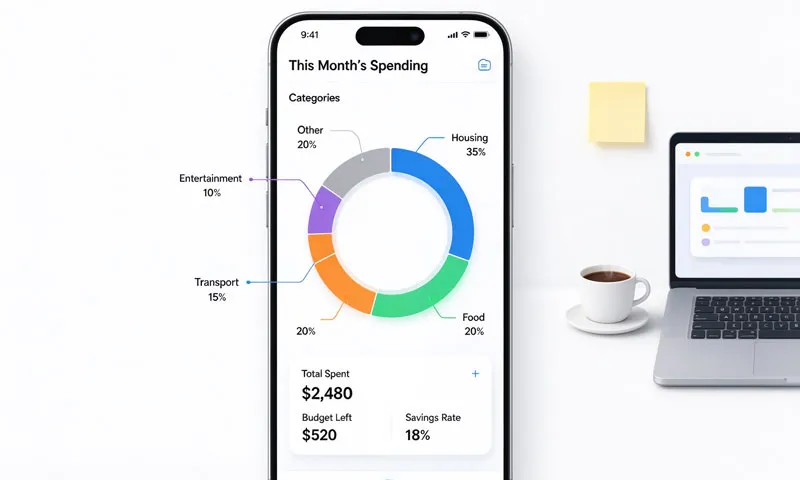
Mint shut down in 2024, so skip any list still recommending it. Current solid options include YNAB (paid, strong for zero-based budgeting), a bank’s built-in spending tracker, or a simple shared spreadsheet. Pick the one you’ll actually open every week. The best app is the one you use.
Increasing Income vs. Cutting Expenses
Cutting costs has a ceiling. You can only trim so much before you’re cutting into things that matter. Income has no ceiling.
If you’re already lean on spending, the highest-leverage move is often negotiating your current salary rather than starting a side hustle from scratch. Workers who negotiate typically get meaningfully more than those who accept the first offer. [salary negotiation success statistics]
That said, a focused side income — freelancing in a skill you already have, not a random gig app — closes gaps faster than most people expect, especially in the first year.
The Emotional Side of Being Broke
Willpower-based advice fails long-term because spending isn’t always rational. Stress spending, reward spending, and boredom spending are real patterns, not character flaws.
The fix isn’t shame. It’s a pause. Before a non-essential purchase, ask what you’re actually trying to feel: relief, control, celebration. Naming it takes away some of its pull.
If financial stress is affecting your sleep, relationships, or mental health more broadly, that’s worth raising with a professional, not just a budget spreadsheet. The National Foundation for Credit Counseling offers free or low-cost financial counseling for exactly this kind of situation. [when to seek financial counseling]
Common Mistakes That Keep People Stuck
Treating a windfall as free money. A tax refund or bonus isn’t extra. It’s a chance to fund your emergency buffer or kill debt faster.
Ignoring your credit score while fixing cash flow. A better credit score lowers your interest rates on everything from car loans to mortgages. Fixing your budget without touching your credit leaves money on the table.
Cutting too hard, too fast. A budget that eliminates every small pleasure usually collapses within a month. Build in a little room, or you’ll abandon the whole plan.
A 90-Day Action Plan to Stop Being Broke
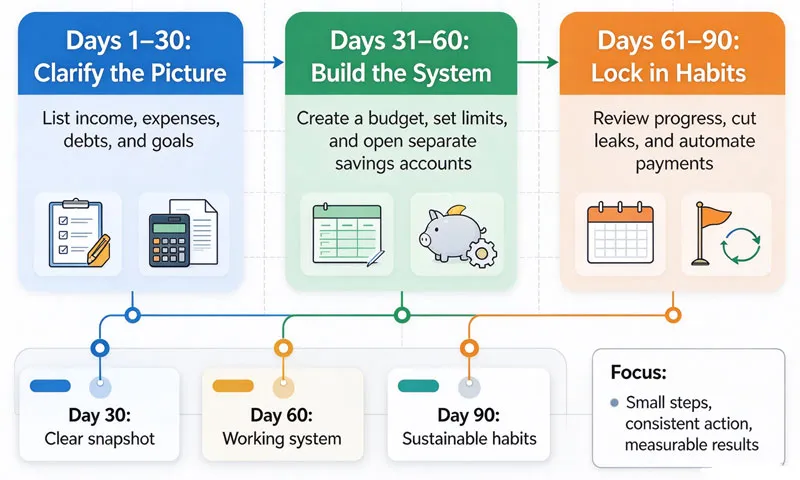
Days 1–30: Diagnose and track. Track every dollar for 30 days, no judgment. Identify your top three leaks.
Days 31–60: Build the buffer, attack debt. Open a high-yield savings account. Automate a small transfer every payday. Pick snowball or avalanche and commit.
Days 61–90: Automate and scale. Set up automatic transfers so saving happens before you see the money. Revisit your budget with real data instead of guesses.
Free budgeting template download
FAQ: How to Stop Being Broke
How long does it take to stop living paycheck to paycheck?
Most people see a real shift within 60 to 90 days of consistent tracking and automated saving, though a full emergency fund can take 6 to 12 months depending on income.
Is it better to save or pay off debt first?
Build a small starter fund of around $1,000 first, then focus on high-interest debt. Full savings goals come after that debt is under control.
Can I stop being broke without earning more money?
Yes, up to a point. Cutting leaks and automating savings solves a cash-flow problem. If expenses already exceed income even after cuts, you’ll need to raise income too.
What’s the difference between being broke and being poor?
Broke is usually temporary and tied to cash flow. Poor describes a longer-term gap between income and basic needs. The fixes for each are different.
How do I budget with an irregular income?
Budget against your lowest expected month, pay yourself a fixed amount, and let higher-earning months build your buffer instead of your spending.
Your Money Doesn’t Need Willpower. It Needs a System.
Being broke isn’t a personality flaw. It’s usually a handful of specific, fixable leaks. Diagnose them, build a small buffer, pick a debt method, and automate the rest. None of this requires perfection. It requires a system that survives a bad week.
This article was last reviewed for accuracy in September 2026.
Disclaimer: This article is provided for general educational and informational purposes only. It does not constitute financial, investment, tax, or legal advice. Every financial situation is different. Please consult a licensed financial advisor, credit counselor, or tax professional before making decisions based on this content.