

Weighing the pros and cons of buying a car gets confusing fast once you factor in new, used, certified pre-owned, and lease options. Most guides stop at “it depends.” We won’t. This guide breaks down real numbers, hidden costs, and a step-by-step framework so you can decide with confidence — not guesswork.
Buying a Car vs. Leasing vs. Financing: Know Your Real Options
Most buyers think the decision is “new or used.” It’s actually four choices, not two.
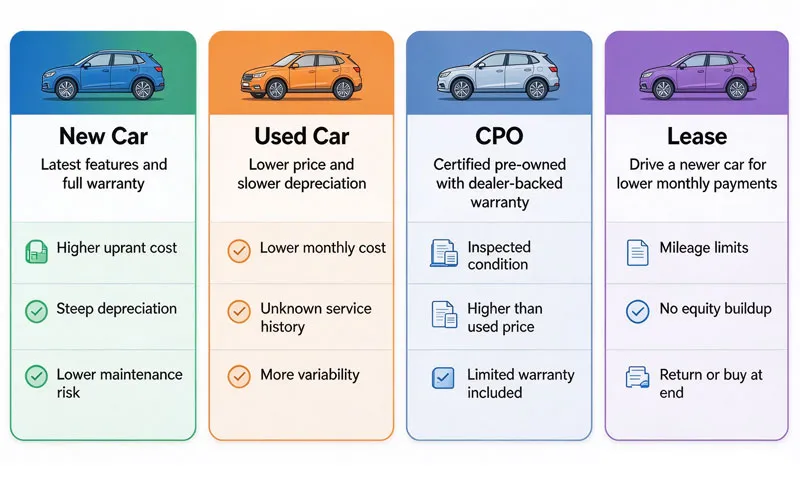
The 4 Ways to Get Behind the Wheel
- New car loan — highest price, lowest risk, full warranty
- Used car loan — lower price, higher interest rate, unknown history
- Certified pre-owned (CPO) — used price with new-car protections
- Lease — lowest monthly payment, no ownership, mileage caps
Quick Comparison Table
| Option | Avg. Down Payment | Warranty | Best For |
|---|---|---|---|
| New | 10-20% | 3yr/36k full | Long-term owners, safety priority |
| Used | 10-20% | None unless added | Budget-first buyers |
| CPO | 10-15% | Extended factory | Buyers who want new-car peace of mind cheaper |
| Lease | $0-$2,000 | Full lease term | Low-mileage drivers who upgrade often |
The Pros and Cons of Buying a New Car
What You Actually Gain
A new car comes with full manufacturer warranty coverage, the lowest financing rates on the market, and zero ownership history to worry about. Lenders treat new cars as lower risk, which means better APR offers if your credit qualifies.
The Hidden Costs Nobody Mentions
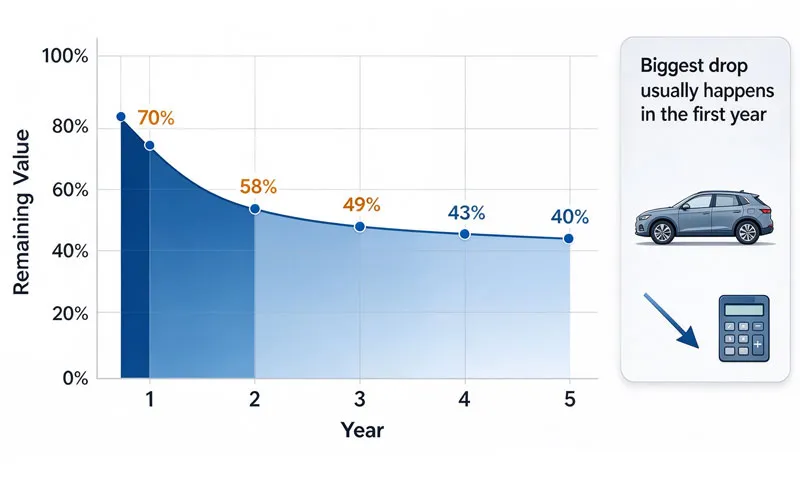
Depreciation is the real cost of new-car ownership. A new vehicle typically loses 20% of its value in year one and close to 60% by year five. That’s not a rounding error — it’s thousands of dollars gone before you’ve made a dozen payments.
Insurance premiums, higher annual registration fees, and dealer add-ons stack on top. Budget for these before you sign anything.
When Buying New Actually Makes Sense
New makes financial sense if you plan to keep the car past the loan term, want the lowest available APR, or need the latest safety tech for a growing family. If you plan to sell within three years, new is usually the wrong call.
The Pros and Cons of Buying a Used Car
Why Used Costs Less Across the Board
Used cars cost less to buy, less to insure, and less to tax. Depreciation has already hit the previous owner, so your resale risk is lower and your loan is less likely to go underwater.
The Risk Side of Used
You’re taking on unknown history. Even a clean vehicle history report can miss recent damage or unreported repairs. Used car loans also carry higher interest rates because lenders see more risk in a vehicle with an uncertain future.
Free VIN lookup and vehicle history
How to Protect Yourself Buying Used
- Run a VIN check before you negotiate
- Pay for an independent mechanic’s inspection
- Ask for maintenance records, not just accident history
- Get pre-approved financing so you’re not at the dealer’s mercy
Certified Pre-Owned: The Middle Ground Nobody Talks About
Most buying guides skip this entirely. That’s a mistake — CPO closes the gap between new and used.
What “Certified” Actually Means
A CPO vehicle passes a manufacturer inspection and comes with an extended warranty, often matching new-car coverage terms. You get a used price tag with new-car protection.
CPO vs. New vs. Used: Where the Value Sits
| Factor | New | CPO | Regular Used |
|---|---|---|---|
| Price premium | Highest | 5-10% above used | Lowest |
| Warranty | Full | Extended factory | None/limited |
| Depreciation already absorbed | No | Partial | Yes |
| Financing rate | Best | Good | Higher |
Is the CPO Premium Worth It?
Run the math: if the CPO premium costs less than the warranty coverage would cost you out-of-pocket on a regular used car, it’s worth paying. If the premium exceeds likely repair costs, skip it.
Buying vs. Leasing: Which Costs Less Over Time?
How Lease Payments Actually Work
Lease payments cover depreciation, not the full vehicle price. That’s why the monthly cost looks lower — you’re only paying for the portion of value the car loses during your lease term, plus mileage restrictions of typically 12,000-15,000 miles per year.
A Real Cost Comparison
On a $35,000 vehicle with a 36-month term: a lease with $1,000 down runs roughly $530-$550 monthly. Financing the same vehicle with a 20% down payment and a market-rate APR runs closer to $850-$870 monthly. The lease wins short-term. But once your loan is paid off, you stop paying entirely — the lease payment never ends.
When Leasing Actually Wins
Leasing beats buying if you drive under 12,000 miles a year, want a new car every three years, and value low monthly payments over long-term equity.
The Total Cost of Ownership Most Buyers Underestimate
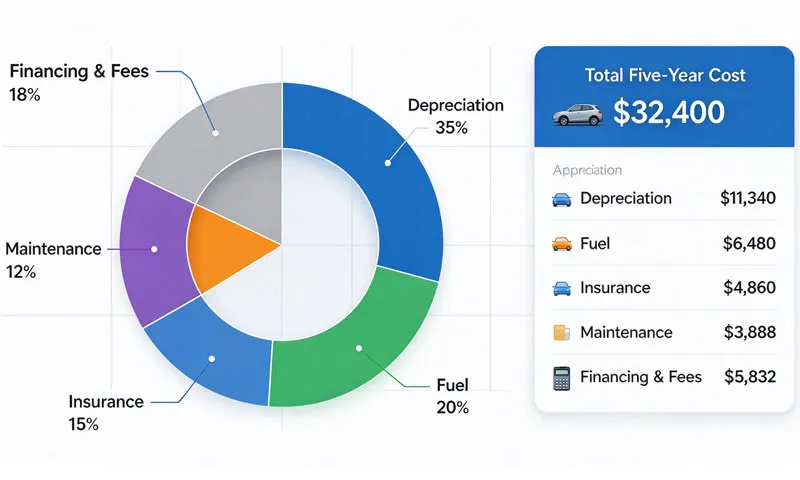
Sticker price and monthly payment are the least useful numbers in this decision. Total cost of car ownership includes insurance, fuel, maintenance, depreciation, and taxes — combined, these often exceed the loan payment itself over five years.
What Financial Advisors Actually Recommend
The widely used 20% rule: your total monthly car costs — payment, insurance, and fuel combined — shouldn’t exceed 20% of your take-home pay. Advisors also recommend a 20% down payment and a loan term no longer than 48-60 months to avoid being upside-down.
2026 Market Factors That Change the Math
Tariffs and New Car Pricing
Recent tariffs on imported auto parts have pushed new car production costs up in 2026, and that pressure is spilling into used car demand and pricing too. Compare current pricing across multiple sources before assuming last year’s numbers still apply.
Current auto tariff impact data
EV vs. Gas: A Variable Nobody Factors In
Electric vehicles carry different depreciation curves, different insurance costs, and potential federal tax credit eligibility that changes the entire cost equation. Check current credit eligibility before assuming an EV is automatically cheaper to own.
How to Decide: A Step-by-Step Framework
- Define your time horizon — under 3 years favors leasing or CPO; 5+ years favors buying new or used outright
- Calculate your true monthly budget — payment plus insurance, fuel, and maintenance, not just the loan quote
- Get pre-approved before you shop — this gives you real negotiating leverage at the dealership
- Compare total five-year cost, not monthly payment, across every option before signing
total cost of ownership calculator
Frequently Asked Questions
Is it better to buy a new or used car in 2026?
It depends on your time horizon. Used wins on upfront cost and total ownership cost for most buyers; new wins if you want the lowest financing rate and plan to keep the car long-term.
What credit score do I need for the best car loan rate?
Lenders typically reserve top rates for scores above 720. Scores in the 600s still qualify but expect a noticeably higher APR.
Is a certified pre-owned car worth the extra cost?
Usually yes if the CPO premium is smaller than the value of the extended warranty coverage you’re getting.
Does buying a car build credit faster than leasing?
Both build credit through on-time payments. Buying builds slightly more long-term credit history since the loan typically runs longer.
Is it smarter to pay cash or finance a car?
Cash avoids interest entirely but ties up savings. Financing preserves your cash reserves and builds credit, at the cost of interest paid over the loan term.
Bottom Line
There’s no universal right answer here — only the right answer for your mileage, your timeline, and your budget. If you’re keeping the car past five years, buying (new or CPO) usually wins on total cost. If you drive under 12,000 miles a year and like driving something new every few years, leasing fits better. Run your own numbers before you decide.
Disclaimer: This article is for informational purposes only and does not constitute financial, legal, or investment advice. Car buying decisions should be based on your individual financial circumstances. We recommend consulting a licensed financial advisor or credit institution before making a final decision.