

What is considered tier 1 credit comes down to one number: a FICO score of 800 or higher. That’s it. No hidden asterisks. But getting there — and knowing what it actually buys you — is where most guides stop short. This one doesn’t. You’ll get the exact range, real dollar savings, and a step-by-step path to get there.
What Is Considered Tier 1 Credit? The Exact FICO Score Range
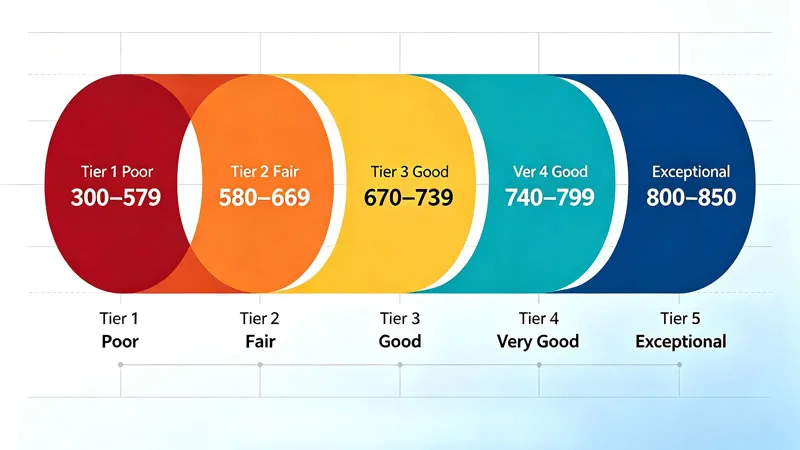
Tier 1 credit sits at 800-850 on the standard FICO scale. Lenders call this range “exceptional.” You’re in the top slice of borrowers, and it shows in nearly every rate sheet you’ll ever see.
Here’s the full breakdown lenders actually use:
| Tier | Score Range | Rating | Approx. % of U.S. Population |
|---|---|---|---|
| Tier 1 | 800-850 | Exceptional | ~21% |
| Tier 2 | 740-799 | Very Good | ~18% |
| Tier 3 | 670-739 | Good | ~21% |
| Tier 4 | 580-669 | Fair | ~17% |
| Tier 5 | 300-579 | Poor | ~16% |
How Rare Is Tier 1 Credit, Really?
Tier 1 isn’t as exclusive as most articles claim. Roughly one in five Americans lands in this bracket, according to Fair Isaac’s most recent score distribution data. That’s a far cry from the “only 1.6% have perfect credit” claim you’ll see repeated across the web — those numbers usually refer to a perfect 850, not the full 800-850 band. Big difference.
FICO vs. VantageScore: Why Your “Tier” Might Look Different
Check your score on two different apps and you’ll often see two different numbers. That’s not a glitch. FICO and VantageScore weigh credit factors differently, and VantageScore’s tiers don’t line up exactly with FICO’s.
| Model | Exceptional/Excellent Range |
|---|---|
| FICO Score 8/9 | 800-850 |
| VantageScore 4.0 | 781-850 |
Lenders overwhelmingly rely on FICO for mortgage and auto decisions, so treat that as your primary reference point.
FICO score vs VantageScore differences
Tier 1 vs. Tier 2 Credit Score: What Actually Changes?
This is the comparison nobody explains well. Moving from tier 2 to tier 1 doesn’t just look better on paper — it changes the terms lenders put in front of you.
| Factor | Tier 2 (740-799) | Tier 1 (800-850) |
|---|---|---|
| Mortgage approval odds | Strong | Near-automatic |
| Auto loan rate tier | Preferred | Top-tier/Super-preferred |
| Negotiating room | Moderate | High |
| Credit card approval | Most premium cards | All premium cards, best limits |
The Real Dollar Difference: A Mortgage Case Study
Say you’re financing $400,000 over 30 years. A tier 3 borrower might land a rate around 7.1%. A tier 1 borrower often qualifies closer to 6.4%. That gap sounds small until you run the math: it’s roughly $180 less per month and over $64,000 saved across the life of the loan.
Rates shift constantly, so treat this as illustrative, not a quote. Pull current averages before you shop.
Current mortgage rate averages
How to Get Tier 1 Credit: A Step-by-Step Action Plan
Getting to tier 1 isn’t complicated. It’s just slow, and it punishes shortcuts.
Step 1 — Build a Flawless Payment History
One missed payment can knock you down a full tier. Automate everything. Payment history carries the most weight in your score by far.
Step 2 — Get Utilization Below 10%, Not 30%
Most advice stops at “keep utilization under 30%.” That’s the floor, not the target. Borrowers who consistently sit in the 800+ range usually run utilization in the single digits — often under 7%.
Step 3 — Diversify Your Credit Mix
A mortgage, an auto loan, and a credit card tell a stronger story than five credit cards alone. Lenders want to see you handle different types of debt responsibly.
Step 4 — Let Old Accounts Age
Closing a paid-off card feels satisfying. It also shortens your credit history and can shrink your available credit — both work against you. Leave it open.
Step 5 — Space Out Hard Inquiries
Each hard inquiry can cost you a few points. Bunch several together and lenders start asking questions. Space applications out by at least six months when possible.
How Long Does It Take to Rebuild to Tier 1 After a Setback?
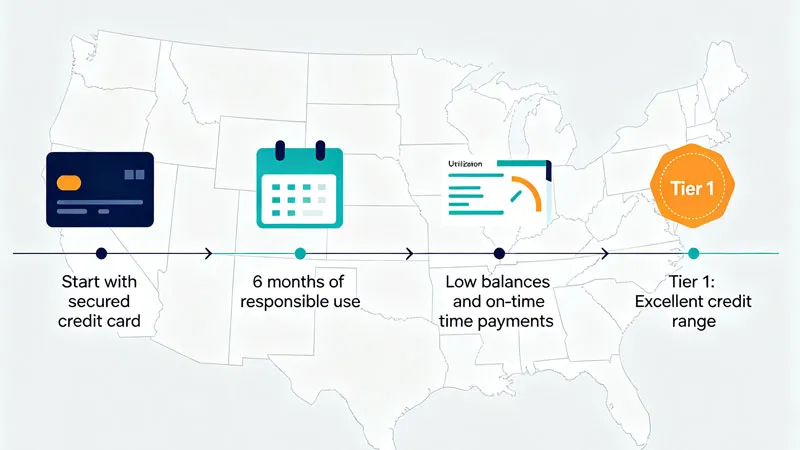
Nobody talks about this, and it’s usually the question people actually have.
Recovering After a Late Payment or Collection
A single 30-day late payment typically fades in impact within 12-18 months if everything else stays clean. Collections linger longer — usually 2-3 years before their weight on your score meaningfully drops.
Recovering After Bankruptcy or Foreclosure
This is the slow climb. Most people rebuilding from bankruptcy see tier 3 (good) territory within 2-3 years of disciplined payment behavior, with tier 1 realistically 5-7 years out. A foreclosure follows a similar arc. There’s no shortcut here — consistency is the entire strategy.
Rebuilding credit after bankruptcy
The Real Benefits of Tier 1 Credit
Auto Loans
Tier 1 borrowers routinely get the lowest published rate tier, often several points below tier 3 rates, plus more flexibility on loan length and down payment size.
Mortgages
Beyond the rate itself, tier 1 credit can mean faster pre-approval, fewer conditions on your loan file, and in some cases, avoiding certain risk-based pricing adjustments entirely.
Premium Cards and Negotiating Power
Tier 1 status opens the door to every premium card on the market. It also gives you leverage: lenders competing for low-risk borrowers will sometimes match or beat a competitor’s offer just to keep your business.
How FICO Actually Calculates Your Score
Five factors drive your score, and they’re not weighted equally:
- Payment history — 35%
- Credit utilization — 30%
- Length of credit history — 15%
- New credit — 10%
- Credit mix — 10%
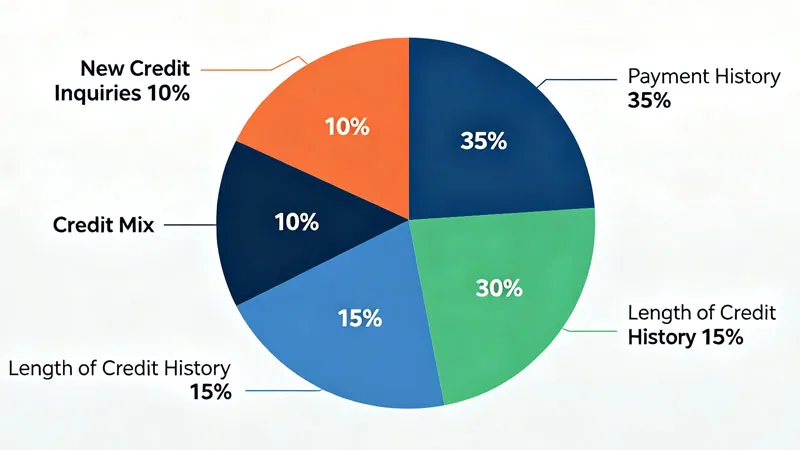
Payment history and utilization together make up nearly two-thirds of your score. If you’re only going to fix two things, fix those first.
Common Mistakes That Keep People Stuck at Tier 2
People plateau just below tier 1 for predictable reasons:
- Paying off a card and immediately closing it
- Applying for multiple cards in a short window to chase rewards
- Assuming a single on-time payment streak “fixes” a thin credit file
- Confusing a soft inquiry (checking your own score) with a hard one — soft inquiries never hurt your score
FAQ: What Is Considered Tier 1 Credit
Is a 750 credit score tier 1 or tier 2?
750 falls in tier 2 (740-799), rated “very good.” You’re close to tier 1 but not there yet.
Do I need tier 1 credit to get approved for a mortgage?
No. Most lenders approve mortgages well below tier 1, often starting around 620-680 depending on loan type. Tier 1 just gets you the best terms available.
Does checking my own credit score lower it?
No. Checking your own score is a soft inquiry and has zero impact on your FICO score.
What’s the difference between tier 1 personal credit and tier 1 business credit?
Personal tier 1 credit refers to your individual FICO score (800-850). Business tier 1 credit is a separate concept — it usually refers to basic vendor trade lines a business uses to build its own credit profile, unrelated to the owner’s personal score.
How often should I check my credit tier?
Monthly is reasonable. Credit reports update roughly every 30 days as new account activity gets reported.
Disclaimer: This article is for informational purposes only and does not constitute financial, credit, or legal advice. Credit scoring models, lender criteria, and interest rates change frequently. Consult a licensed financial advisor or credit counselor before making decisions based on your specific credit profile.